Featured

Table of Contents
While we recognize with the tax arrangements of the issues provided herein, as Financial Advisors of RJFS, we are not qualified to render recommendations on tax or legal matters. You should talk about tax or legal matters with the appropriate expert. **TSP: The Thrift Cost Savings Plan (TSP) is a retirement cost savings and financial investment plan for Federal employees and members of the uniformed services, consisting of the Ready Reserve.
The Federal Retirement Thrift Investment Board (FRTIB) administers the TSP. Individual retirement accounts: Contributions to a standard individual retirement account might be tax-deductible depending upon the taxpayer's earnings, tax-filing status, and other elements. Withdrawal of pre-tax contributions and/or revenues will be subject to normal income tax and, if taken prior to age 59 1/2, may be subject to a 10% federal tax charge.
In addition, with a Roth individual retirement account, your permitted contribution might be reduced or removed if your yearly income goes beyond certain limits. Contributions to a Roth individual retirement account are never tax deductible, but if specific conditions are fulfilled, distributions will be entirely income tax free. Roth IRA owners must be 59 or older and have actually held the individual retirement account for 5 years before tax-free withdrawals are permitted.
Additionally, each converted quantity might undergo its own five-year holding period. Converting a traditional individual retirement account into a Roth individual retirement account has tax implications. Investors ought to consult a tax consultant before choosing to do a conversion.
Start by evaluating your budget plan for the year. Evaluate your bank and credit card statements for the previous year.
Comparing the Best Credit Cards for 2026
Adjust your budget categories to reflect changes in your lifestyle or financial goals. Guarantee that you are taking full advantage of retirement savings opportunities. Contributing the maximum total up to your retirement accounts can offer considerable tax benefits and assist protect your financial future. 401(k) plans: $24,500, with an extra $8,000 catch-up contribution if you are 50 or older.
1Consult with a financial professional to figure out the best retirement strategy. Year end is also a perfect time to review and rebalance your financial investment portfolio. Ensure that your possession allocation lines up with your threat tolerance and monetary goals. Examine the efficiency of each investment. Rebalance your portfolio to keep your desired asset allotment.
Tax preparation is an essential part of year-end financial planning. Review your tax situation and take steps to decrease your tax liability.
Increasing Your Capital Growth During 2026
Talk to a tax expert to check out tax-saving opportunities and tax-efficient investment techniques. Regularly evaluating your credit report is important for keeping a healthy credit score and determining prospective mistakes or deceitful activity. Acquire a free copy of your report from each of the three major credit bureaus (Equifax, Experian and TransUnion) and examine them thoroughly.

As you examine your finances, take time to upgrade your financial goals. Reflect on your achievements over the previous year and set brand-new objectives for the year ahead.
Evaluation and change your objectives regularly throughout the year. Ensure that your insurance protection meets your current needs. This includes health, life, home, automobile and any other relevant policies. Update your protection as required to show any modifications in your personal or monetary circumstance. Assess your existing protection and determine any spaces.
Increasing Your Savings Potential During 2026
It's important to occasionally evaluate and update your recipient classifications on your financial accounts and insurance policies. Making sure your classifications are present helps prevent potential conflicts or legal concerns in the future.
Verify that your beneficiary classifications align with your present dreams and estate plan. Update your designations as required, bearing in mind any changes in your personal or monetary scenarios. If you have a Versatile Spending Account (FSA) or Health Savings Account (HSA), keep in mind to utilize your eligible dollars before they expire.
Keep all receipts and documents for tax purposes. An emergency situation fund is important for financial stability. Goal to have 3 to six months' worth of living costs conserved in a quickly accessible account.
Conserve any windfalls, such as tax refunds or rewards. Start conserving for these costs now to assist prevent monetary pressure later.
Ways to Boost Your Rating Quickly in 2026
Set up automatic contributions to these accounts. Consider seeking advice from with a financial specialist who can help you establish a thorough and comprehensive monetary strategy. Look for a Certified Monetary Coordinator or a fiduciary consultant.
By following this year-end monetary list, you can work towards a flourishing and economically secure new year. Put in the time to examine and change your finances, and do not be reluctant to look for expert suggestions to ensure you are on the best track.
A monetary plan is a structure for directing earnings, costs, debt, and savings. A clear strategy decreases unpredictability and supports decision-making throughout the year.
How to Reduce Debt Through Expert in 2026Major Benefits of Managing Debt With Professional Help
Specify Priorities Determine the main monetary objectives for the year. Typical concerns include emergency situation cost savings, financial obligation decrease, retirement contributions, important purchases, and future planning requirements.
Different fixed obligations from versatile spending. Appoint a specific amount to savings and financial obligation payment. Set repeating transfers for cost savings, retirement contributions, and essential sinking funds.
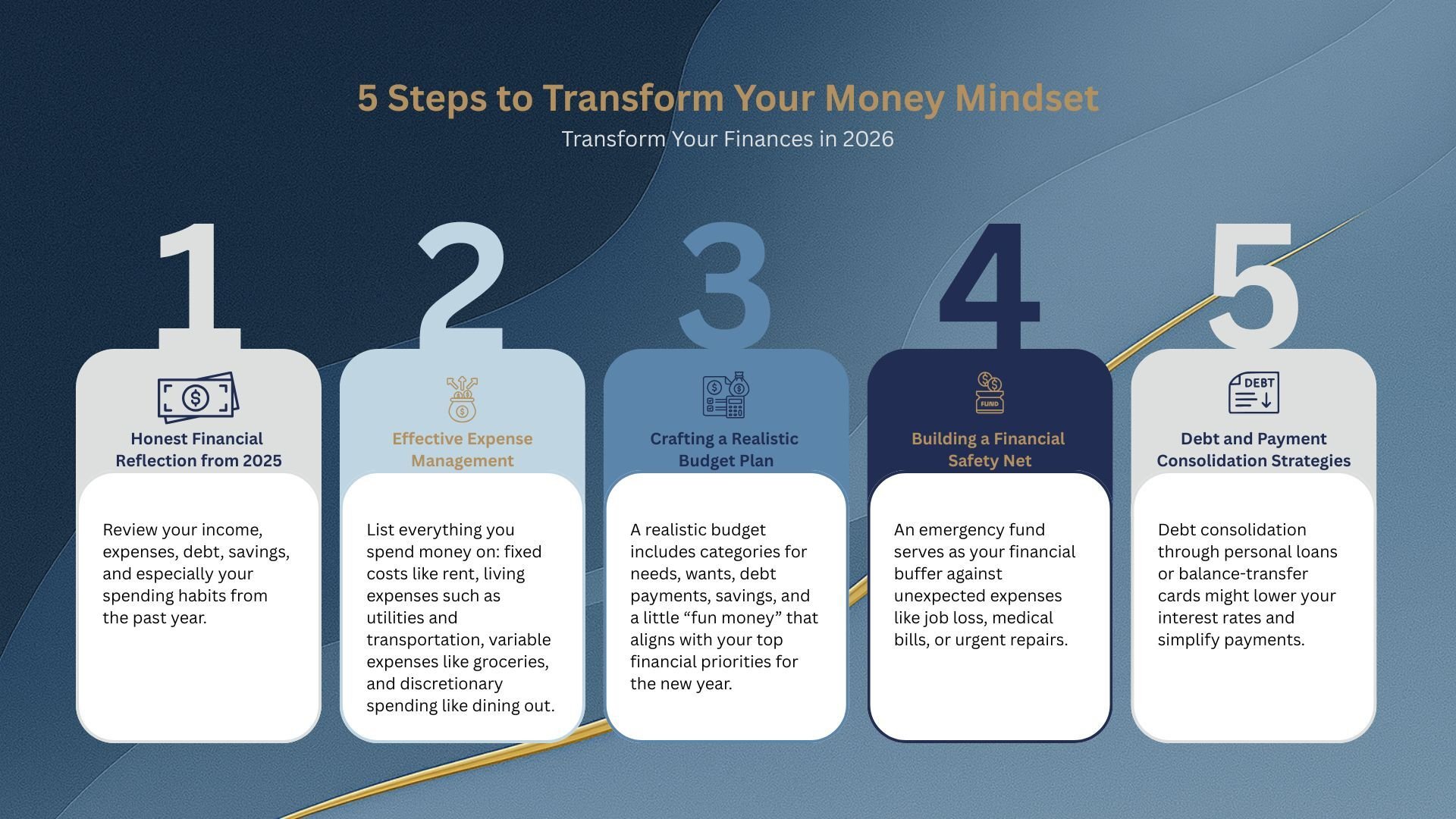
Irregular expenses produce monetary instability when not prepared in advance. Designate month-to-month contributions to a sinking fund for products such as insurance coverage premiums, property taxes, lorry maintenance, medical needs, and annual memberships.

Latest Posts

Improving Damaged Rating Scores Quickly in 2026

Key Strategies for Economic Wellness in 2026
Steps to HUD-Approved Home Counseling